

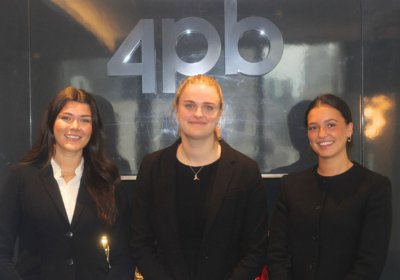
By Ciara Coleman, Imogen Watkins and Josephine Moreton (Pupil Barristers at 4PB)
Published: 4th November 2024
The Family Law Week Conference 2024 was held at the Cavendish Conference Centre on Thursday 24th October 2024. The day was opened by Managing Editor Mani Singh Basi of 4PB, leading into the keynote address by Editor-in-Chief HH Stephen Wildblood KC of 3PB. There were also contributions from Stuart Taylor-Jones, the Marketing and Podcast Editor.
At the outset, Mani announced he would be giving three copies of his book to three lucky attendees. His recent book, published this year is: ‘A Practical Guide to the Participation of Children in Family Law Proceedings’. The winners are set out at the bottom of this summary.
Keynote Address – court as last resort?
HH Stephen Wildblood KC opened his address with statistics about the situation the Family Justice System currently finds itself in. He lamented that private child law cases were currently taking 44 weeks to get through the system (up from 30.1 weeks in 2013), and 44 weeks in public child work (up from 38.3 weeks in 2013).
In order to reduce the backlog in private law cases, he advocated for a greater use of NCDR methods, drawing contrasts with the Danish system whereby it is a firmly integrated part of the court system. He praised the Voucher Scheme to make NCDR methods more accessible, noting a projected investment of £23.6mn into the scheme by March 2025. However, he expressed concerns that NCDR methods, particularly arbitration, may cause a two-tier justice system without better investment, with those who can afford to instruct an arbitrator perhaps managing to bypass the court delays. To address this problem he conveyed the importance of NCDR methods being take on pro bono where possible.
Where public law cases were concerned, HH Wildblood KC posited the question: can you mediate in public law? Ultimately, he concluded that NCDR methods, like mediation, would work within the public sphere, deploying it at the point where the relationship between child services and the parents is breaking down. Using a properly trained mediator and psychologist may in certain situations be successful to create a workable solution to avoid public child proceedings.
The crux of this address was that in order to see a change in the statistics highlighted above, the family justice system must embrace NCDR methods, and that it is ultimately incumbent on actors within the system to encourage the use of such methods.
Private Law Disputes
Anita Guha of 7BR and Forum Shah of Dawson Cornwell delivered an important update on caselaw within the private child law sphere. Cases of particular note were:
- TRC v NS [2024] EWHC 80 – Lieven J reminded practitioners that fact finding hearings are often disproportionate, and that in a post RE HN world we must look at what probative value the material has and how it relates to welfare issues.
- T & O [2024] EWHC 2236 – Henke J criticised the improper delegation of a judicial function to an ISW, whereby the ISW was required to determine if contact should change from supervised to unsupervised. A contested hearing should have been listed to consider potential harms.
- Re BC [2024] EWHC 1639 – Paul J determined that any application to change a forename should be made to the High Court.
- A v B [2024] 1 All ER 1047 – Knowles J made an important decision regarding parties’ sexual activity with third parties. It is less likely to be relevant than the parties’ own activity when allegations of sexual impropriety are made. An application should be made if an alleged perpetrator seeks to rely on third party allegations.
Transparency in Family Law – what you need to know
Louise MacLynn of 1GC Family Law and Somia Siddiq of ITN Solicitors considered where we currently are with transparency in the family courts following the 2021 transparency review. The following helpful tips were provided:
- Reporters can attend all care, Inherent Jurisdiction, and most private law proceedings unless the exclusion criteria in FPR r27.11 are met.
- In reporting pilot cases, the presumption is that reporting will be allowed and a Transparency Order will usually be issued.
- The court is not obliged to make a Transparency Order. If any reporting is opposed, the court must apply the balancing test from Re S [2004] UKHL 47. The same test applies if the press wants to access more than just case summaries or transcripts of any hearings.
- Even if a court is not part of the transparency pilot scheme, non-pilot courts are likely to support using the Transparency Order framework as guidance. In fact, the High Court is actively encouraging this approach.
- In most cases, the press wanting access will not be controversial, but it can consume a considerable amount of court time. Accordingly, preparation is key – discussions regarding Transparency Orders should be on the agenda for every advocate’s meeting.
- It is often difficult for the press to give advance notice of attendance as lists are not published until the night before hearings.
- It remains a fundamental principle of journalism that the press do not have to reveal their sources. Potential sources can include the judicial press office, listing offices, or information from the parties involved.
Care Proceedings with an International Element
Dr Maria Wright gave an interesting talk on Care Proceedings with an International Element.
She opened indicating that in 2014 there was controversy surrounding the courts of England and Wales being criticised for not considering the relevant law, and making decisions without considering whether they had the jurisdiction to do so. What followed was a cascade of guidance in how to deal with care cases with an international element which is outlined below:
- Re E [2014] EWHC 6 Fam which deals with the approach to care proceedings with an international element.
- Sir James Munby, the President of the Family Division (as he then was) have Guidance on The International and Child Abduction and Contact Unit (ICACU)
- Guidance to discourage UK social workers travelling overseas to conduct assessments in Leicester City Council v S [2014] EWHC 1575 (Fam)
- Guidance to ensure to notify the embassy if care proceedings issued concerning foreign nationals in London Borough of Merton v LB 2014 EWHC 4532 (Fam). Further see, Family Courts Informing Consular Authorities of Proceedings (18 April 2019) International Family Justice Office.
- Department of Education Guidance 1996 Hague Convention (2012) and Working with Foreign Authorities (2014)
1996 Hague Convention on the Protection of Children
Maria outlined that the Convention has been in force since 2012 and is now used in place of EU law, following Brexit.
Jurisdiction
The Jurisdictional provision of the 1996 Hague Convention applies to all care proceedings with an international element. Maria outlined that this is the ‘first point of call’ in cases such as these, which is confirmed by London Borough of Hackney v P & Ors (Jurisdiction: 1996 Hague Child Protection Convention) (Rev 1) [2023] EWCA.
She noted that the primary ground for jurisdiction is the child’s habitual residence, which can be found in Article 5 of the 1996 Convention. It was noted in Re A & Ors (Care Proceedings: 1996 Hague Convention: Habitual Residence) [2024] EWFC 110 (Fam) that habitual residence is a question of fact and the place reflects ‘some degree of integration into their social and family environment’.
Article 6 of the 1996 Convention outlines instances where there is an alternative to habitual residence. Namely internationally displaced or refugee children and those children whose habitual residence cannot be established. If the court has jurisdiction pursuant to Article 5 or Article 6 of the Hague Convention, that jurisdiction can be transferred to another contracting state, so long as it falls within the criteria of Article 8 and Article 9 of the Convention.
Non- Contracting state
Maria outlined what happens if a child who is present in England and Wales, but is habitually resident in a non-contracting state, becomes the subject of care proceedings. She outlined that Article 5 would not be engaged but as is confirmed in London Borough of Hackney v P and Others (Jurisdiction: 1996 Hague Child Protection Convention) [2023] EWCA Civ 1213, Article 11 can be used in emergency situations.
What happens when Habitual Residence changes?
Maria indicated that habitual residence is examined at the date that proceedings are commenced, but if a situation changes then this may be looked at again. In Re A & Ors [2024] EWFC 110 (Fam) it was confirmed that habitual residence can be acquired by children.
If there has been a wrongful removal of a child then the courts of England and Wales may still retain jurisdiction pursuant to Article 7 of the Convention, as confirmed by London Borough of Haringey v T (1996 Hague Convention Art 7) [2024] EWFC 151.
Research
Maria outlined some findings from her research from her PHD. She noted that her research found that there is confusion around jurisdictional rules and there is a need for a further awareness of how to soften the blunt impact of a jurisdictional decision.
She further indicated that there are tensions in overseas assessments. Specifically where domestic regulations and frameworks which are not designed for cross-border relationships, come up against diversity of approaches to child protection practice, family law and social work practice.
Maria noted that special guardianship can be considered in placing a child outside of the jurisdiction. Highlighting that consideration must be given to how assessments are carried out, to ensure they are done so in a legally compliant and culturally relevant manner. She outlined some useful guidance in PLWG Special Guardianship Best Practice Guidance :SGOs March 2021 and Re K, T and U (Placement of Children with Kinship Carers Abroad) [2019] EWFC 59.
Article 33
Concluding, Maria noted if consideration is being given to placing a child in a contracting state under Article 33 of the Convention, it is necessary to first obtain consent from the overseas competent authority (similar to our Local Authority) before placing the child. She concluded that failure to obtain consent could lead to a non-recognition under Article 23(f).
Representing those who Re-enter the Care System, Care Leavers, their Families and how to Navigate the System
Cerys Sayer of Westgate Chambers delivered an extremely important workshop on how to categorise care leavers, their rights and their entitlements so as to ensure they are getting all the help they are entitled to. She stated that sometimes it is not clear to solicitors or the local authority, and in such cases where confusion has arisen it has culminated in professionals disagreeing on the relevant category the individual falls into. This can ultimately result in delay. Crucially, Cerys stated that if there is uncertainty, the issue should be frontloaded, whereby a chronology and disclosure of the client’s records from the local authority should be expedited. This will help categorise the client.
Cerys then considered some of the support and services available to care leavers:
- Personal Support – care leavers are entitled to Personal Advisors and Advocates.
- Monitoring Services – transition plans and pathway plans should identify wishes and feelings about the future and how they can be assisted in meeting these. There must be an assessment within 3 months of the child’s sixteenth birthday, and there must be a review after: 6 months; a change of circumstances; at the young person’s request; at the request of the Personal Advisor; or before terminating a placement.
- Under the Data Protection Act, the young person is entitled to copies of their plans and their records.
- Adult Social Care – whether adult social services should be involved must be a consideration. Where necessary, a transition assessment should be undertaken before they reach adulthood in order to assess in advance what help is needed.
Debate – Contact with Adoption Should No Longer be the Exception
An exciting debate then ensued which saw Grant Keyes of 3PB argue for the titular motion, and Mark Calway of 3PB argue against the motion. His Honour Stephen Wildblood KC of 3PB acted as Chair of the Panellists, with Dr Beverley Barnett-Jones of the Nuffield Family Justice Observatory and Sarah Beskine of Hopkin Murray Beskine acting as panellists. Mani Singh Basi of 4PB was the Chair of the debate.
Grant Keyes argued that when a child is adopted open adoption should be the starting point, affirming that letterbox contact is now outdated. He argued that there are benefits in contact with adoption for identify formation and understanding a child’s biological family history, including important medical history. He further contended that contact with adoption is a better option, rather than leaving children without knowledge of what is ‘behind the door’ of their biological family.
Expanding, he argued that contact reduces the sense of abandonment for the child. He reasoned that it also allows the adoptive parents to have a better understanding of the child’s background, and allows the biological parents to have transparency about how the child is doing. He affirmed that this is not about co-parenting. He concluded that open adoption should be the starting point.
Mark Calway countered arguments by Grant Keyes indicating that the court must consider under s46(6) Adoption and Children Act 2002 whether there should be arrangements for allowing personal contact, and affirming that the court already has the ability to make orders for contact under s 51(A) Adoption and Children Act 2002. He raised the ‘fundamental question’ – why has the child been adopted?
He argued that it is important not to overestimate the benefits of open adoption and a presumption in favour of it, as there can be difficulties with contact, and the secondary harm it may cause. Expanding, he stated that undermining adopters and the ‘forever family’ comes with difficulties. He argued anything that hinders this, such as contact, could prove to be an issue. He reasoned that each case will need to be looked at on an individual basis and will be provided for within the law.
Dr Beverley Barnett-Jones of the Nuffield Family Justice Observatory explained that the research tells us that on balance, contact is beneficial for the wellbeing of children over their childhood and into adulthood.
Sarah Beskine of Hopkin Murray Beskine shared views that there is no room for any absolute in adoption. Further, that in order to effect successful contact the appropriate support needs to be provided, which she expressed has not quite been done yet.
There were some interesting questions from the audience which explored different avenues surrounding the titular motion, and then a vote, where the majority of 73.68% prevailed in favour of the titular motion.
International Children Law – what you need to know
Simon Craddock of Brethertons LLP and Teertha Gupta KC of 4PB began their seminar with a helpful so-called “Travel Safety Card” which set out the basics of international children law in a nutshell, as below:
1. What do you do if a parent comes to see you and says the police have visited them late last night, taken the kids passports and they have got some kind of court order?
2. Is the parent entitled to legal aid?
3. Is there any defence? If so, what?
Whilst there are cases that are non-Hague, the primary focus of this seminar was the Hague Convention 1980. By setting out the statistics, it became evident that there has been a stark shift: for 2014, return in – 275, return out – 170; whilst in 2023, return in – 113, return out – 145.
With the backdrop of the Hague Convention 1980 defences (such as rights of custody, habitual residence, consent, acquiescence and Article 13(b), child objections and settlement) and the Convention’s objective to secure a swift return, Simon and Teertha ventured on to provide a whistlestop tour of key international children law cases by jurisdiction – each led by a collection of well-humoured, country specific facts. In doing so, attention was drawn to the following case-law:
- Romania: Re D (A Child) [2006] UKHL 51
- United States: Re T (Abduction: Protective Measures: Agreement to Return) [2023] EWCA Civ 1415
- New Zealand: S v K, Re W and E (Habitual Residence) [2024] EWHC 2596 Fam
- India: ZZ v AA [2024] EWHC 1411 (Fam)
- Iraq: Re D (Wardship: Jurisdiction: Cutting Across Statutory Schemes) [2024] EWHC 1658
- Ukraine: Re N (A Child) (Ukraine: art 13 b) [2024] EWHC 871
- Scotland: FZD v MQB [2024] WFC 205
- Sudan: Omay Ali Elhag Elkndo v Elnoaman Gassam Elsyed & Others [2024] EWHC 2204 (Fam)
- UAE: AB v CD [2024] EWHC 2521 (Fam)
Relocation – Internal and External in Private Law Children Disputes
Professor Rob George of Harcourt and Piers Pressdee KC then gave both an engaging and informative talk about Relocation in Private Children Disputes, both Internally and Externally.
They provided the names of two helpful books; namely ‘Dictionary of Private Children Law’ by Zoe Saunders, Piers Pressdee KC and Professor Rob George and ‘Relocation A Practical Guide’ by Dr Rob George, Frances Judd QC, Damian Garrido QC (as they were then) and Anna Worwood with a foreword from The Rt Hon Lady Justice Black.
In their talk, they indicated that a focus on welfare is the short answer to being successful in a relocation case. They expanded and provided some very helpful case law to be, and incidentally to not be, guided by.
They advised he audience not to use Payne v Payne [2001] EWCA Civ 166 and rather focussed on the following cases for helpful guidance:
- K v K (Relocation: Shared Care Arrangement) [2011] EWCA Civ 793 [2012] 2 FLR 880
- Re F (Relocation) [2012] EWCA Civ 1364, [2013] 1 FLR 645
- Re F (International Relocation Cases) [2015] EWCA Civ 882, [2017] 1 FLR 979
- Re C [2015] EWCA Civ 1305, [2016] Fam 253
They provided the following helpful tips on how to succeed in a relocation application:
- Do your homework
- Focus on the benefits to the child
- Promote the other parent’s role
- Show why the benefits of the move cannot be achieved here
To defend a relocation application they recommended:
- Push for increased shared care
- Highlight any actions by the relocating parent that sideline respondent
- Focus on lost quality of time
- Demonstrate that the benefits of relocation can be met here.
They also highlighted some tricky issues:
- Previous child abduction
- Previous unsuccessful relocation application
- Concurrent financial remedies issues
- Domestic abuse allegations
- Alienation allegations
They concluded by discussing the future of relocation cases, and said that at present it is very hard to succeed. In relation to statistics, based off Professor Rob George’s research, they stated that in 2012 around 66% of litigated cases succeeded. Contrastingly, and there is no accurate data, but an estimate for 2024 is that around only 40% succeed. However, it was observed that there may be more relocation cases fought as the pendulum surrounding domestic violence is returning to the centre.
The Future of Family Law for 2025 and beyond
Leslie Samuels KC of Pump Court Chambers brought the Conference to a close with his talk on what he believes the future of family law to look like. In making reference to no fault divorce and diverse family structures, Leslie focused predominantly on the use of AI in the legal sphere. After giving his opening note, he confessed that it had been entirely generated by Chat GPT. In seconds.
On the face of it, it seems that such technology could – among other things – analyse ethical implications for us and generally enhance our capabilities. The uses of AI are endless. Holland even uses AI to assess the likelihood that a child will require intervention.
Yet – AI does not come without its pitfalls. For one, it is terrible at telling jokes. Leslie asked Chat GPT to generate a joke for his opening note and it came up with: “Why did the divorce lawyer cross the road? To get to the other side of the settlement”. Take from that what you will. After subsequently asking Chat GPT to generate a legal anecdote, a request to which it equally obliged, it became clear that such systems lack emotional intelligence – an essential quality for family law. Further issues also arise with confidentiality and privacy. Unless your firm or chambers have their own bespoke AI software, any information inputted is stored potentially for others’ use. If it is fed court documents, one must consider being in contempt of court and, at the very least, in breach of GDPR. Other issues arise with LLMs (large language models) operating through somewhat hit-and-miss predictions and AI systems picking up bias on the internet and that which may be inherent in the prompt put in.
Whilst Leslie did not deem the above fundamentally problematic for the future use of AI in family law, he did express concern that we lose our own abilities by using AI’s words rather than our own because we think they are better.
In any event, Leslie concluded his talk, and the Conference, by citing three predictions for the future of family law, as follows:
1. Legal parenthood. We will come increasingly to challenge the concept that it is not possible to have more than two legal parents.
2. Ongoing contact in adoption. We will need to have a wider look of where adoption sits in comparative jurisdictions, since many jurisdictions simply do not recognise adoption in the form that we have here. For example, it is incompatible with Islamic law.
3. Cohabitation law. It will never happen. Whilst reform would give legal rights to the majority of the 3.6 million cohabiting couples in UK, legal enforcement would likely be through court system and there are not enough judges, courts and court staff to handle this.
Ultimately, Family Law Week thanked everyone at the end for their attendance, including the speakers and the sponsors. The conference was a milestone and a first since the covid-19 pandemic, as Family Law Week have been running conferences since 2005.
Lastly, the winners who will be receiving a free copy of ‘A Practical Guide to the Participation of Children in Family Law Proceedings’ are:
- Sacha Lee, Dawson Cornwell LLP;
- Elizabeth Wentworth of at Pallant Chambers
- Annie Francis of National Legal Service
04/11/2024
